
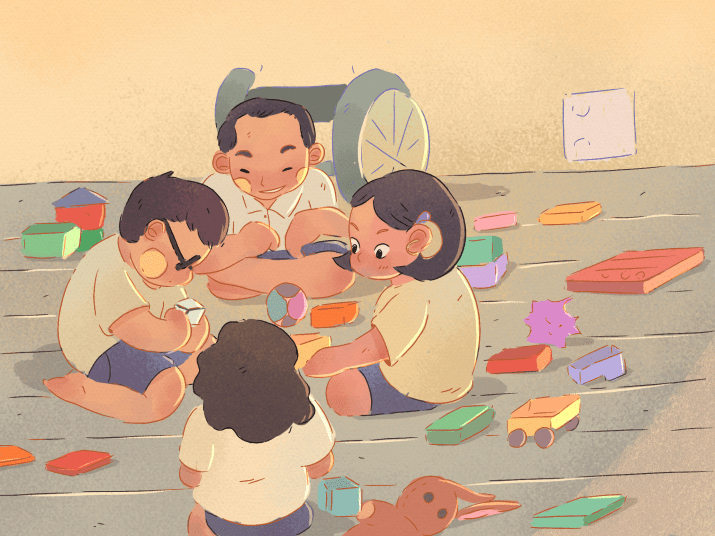
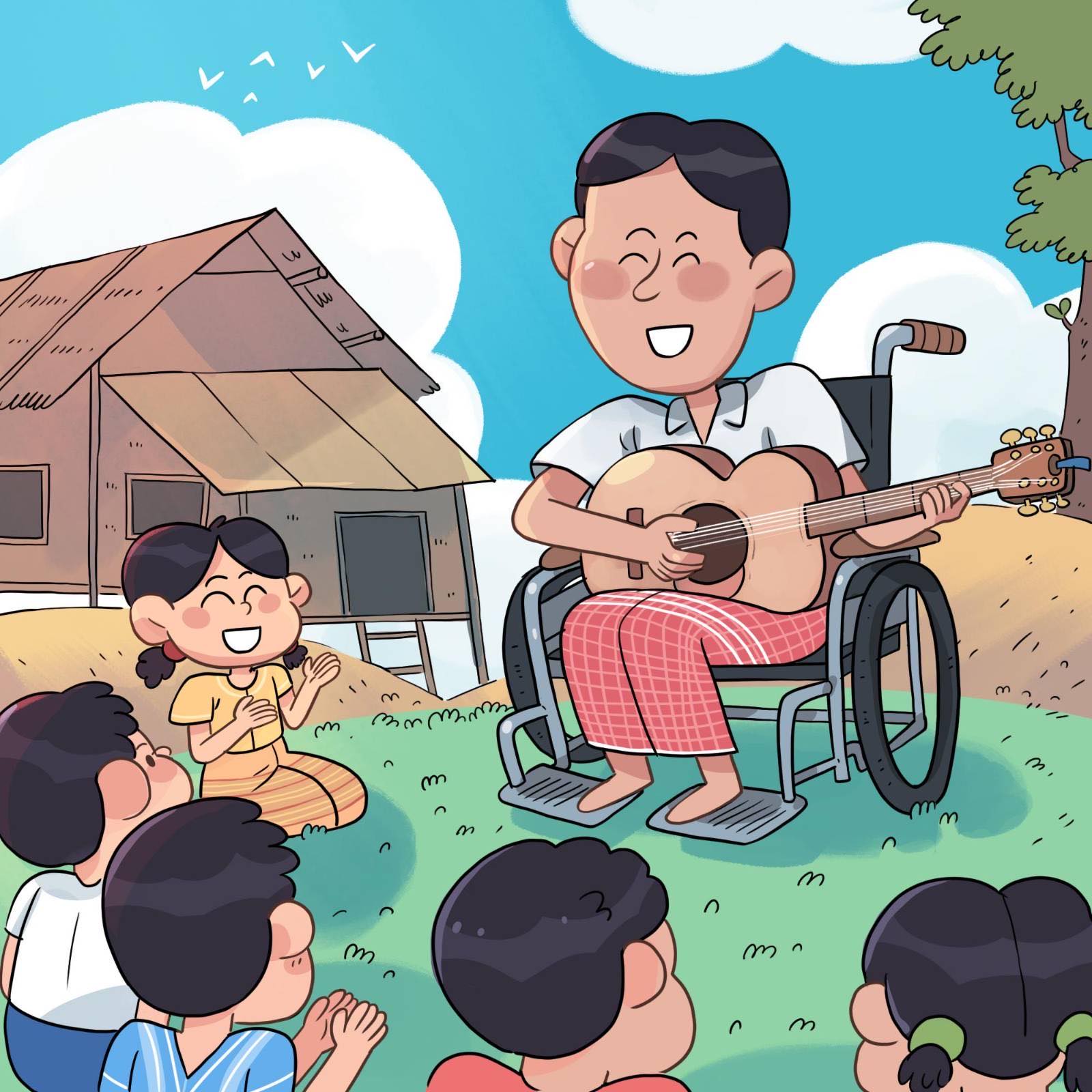
Communities are made up of all kinds of people. We think differently, speak differently, act differently. Some are quick to anger, some are thoughtful, some are loud, some are quiet, some fast, some slow. Communities, by definition, are diverse. Disability is just one more point of difference. Difference is the glue that makes communities resilient, that enables them to thrive. When people with disabilities are denied access to the same resources and opportunities afforded to everyone else, communities are poorer for it. Discrimination against difference of any kind contradicts the very idea of community. Equal access to education is vital. School is where we learn about diversity in the community. It’s where we learn to interact, play, and cooperate with each other. It teaches us to accept each other’s differences and treat everyone with the respect they deserve. Earlier this year, we spoke to a teacher and a student from northern Shan State. Nu Nu Aung* and Nandar*, who both live with disability, told us about the impact school is having not just on their lives, but on the lives of their fellow teachers and students.
“At the beginning, the children found it strange to have a teacher with a disability. They were also doubtful whether they would actually learn anything from me. It was difficult for me to have confidence, too. But gradually, they began to trust me; they saw my commitment.”
Nu Nu Aung
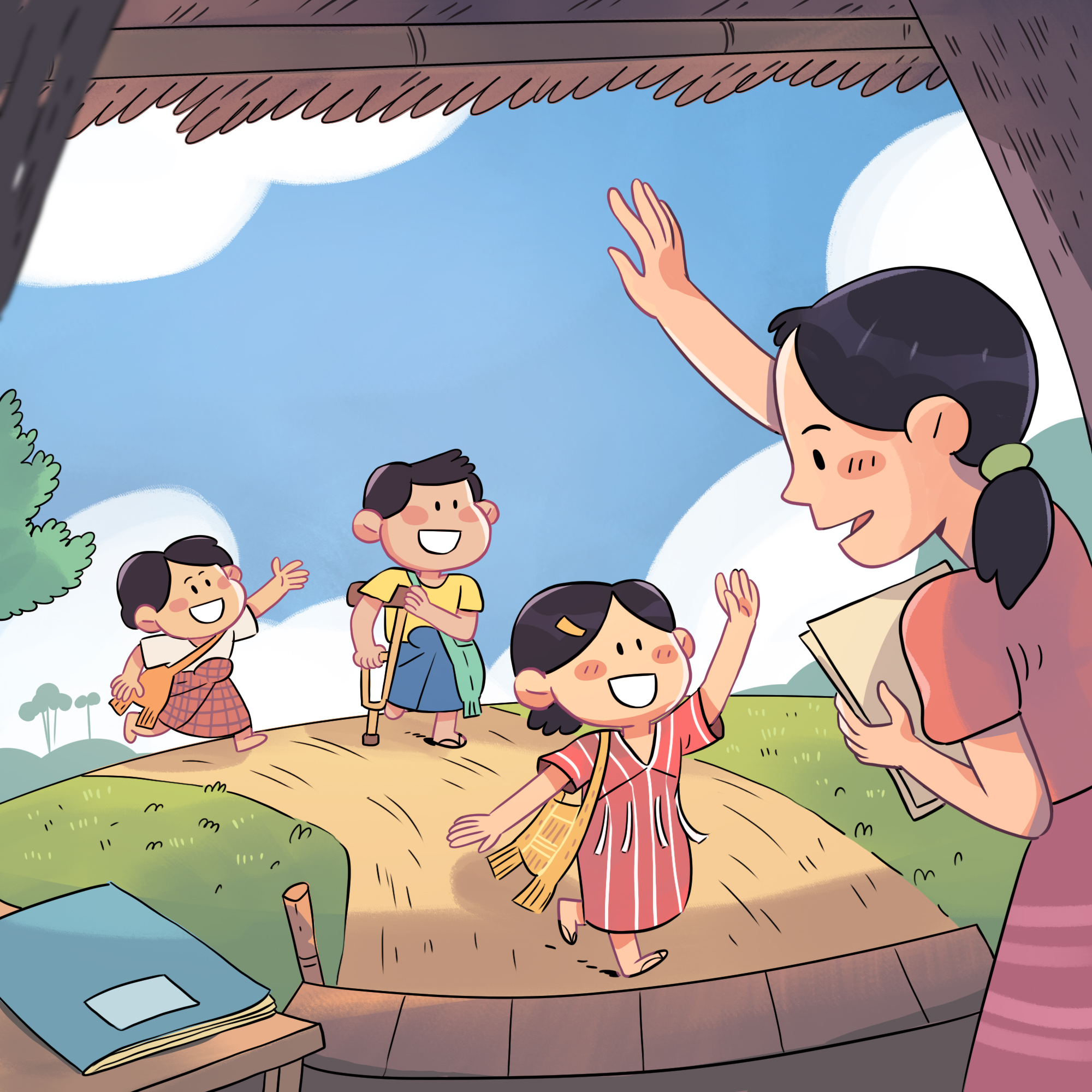
Nu Nu Aung is a 26-year-old 5th and 6th teacher at a school in the northern Shan State, one of the non-state education systems in the Kachin context. When she completed her basic education at an orphanage in 2015, she began volunteering as an assistant teacher and then as a teacher. In 2017, she started working as a teacher and now has over five years’ experience under her belt.
“My father was a teacher, and I have always looked up to him. It is part of the reason that I became a teacher. The other motivation was that I am committed to helping children living difficult lives, children who face similar challenges I faced when I was young. There is a student in my class with mental disability, and it reminds me of my childhood when I was discriminated against and made fun of by the other students. Now I am in a position to help, so I teach the class not to behave in that way and to help him, to make him feel included.”
In Myanmar, most of the schools in complementary education systems lack resources and facilities to support people with disabilities. This is largely due to historically limited funding and support but has been exacerbated by ongoing conflict and the displacement of communities.
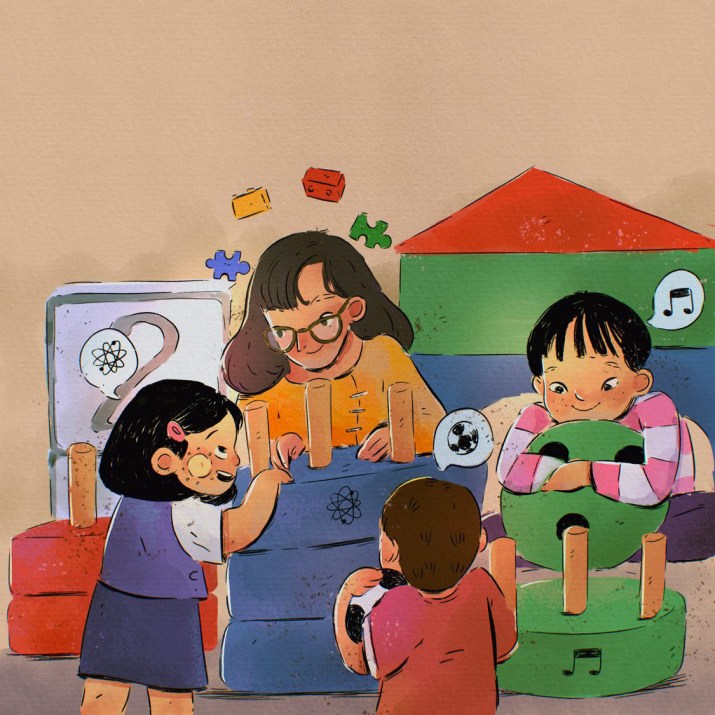
The Myanmar Education Consortium (MEC) works to ensure access to quality education for all children, regardless of gender, disability, or income. In partnership with ethnic-based education providers, MEC integrates gender equality, disability, and social inclusion (GEDSI) principles into all aspects of its work. As curricula have evolved to include more progressive content – for example, GEDSI topics in social studies – schools have become more inclusive. However, appropriate support in terms of facilities, systematic inclusion, and strategy remains a challenge.“There are challenges when I attend trainings. For example, when my accommodation is a bit far from the training centre, it is an issue for me because I walk slower than other people. I remember this one time when I started working here. I lived about 15 minutes’ drive away, and my uncle usually gives me a lift on his motorbike. But that day, he couldn’t pick me up. It was raining heavily, and everybody had already left. It was getting dark and I didn’t know how to get myself home. I was only 22 years old at the time, and I remember feeling so helpless,” said Nu Nu Aung. To address these challenges, MEC recently commissioned research to document the obstacles faced by its partners in the collection, management, and use of disability disaggregated data. While there is still a long way to go, the research is an important step in identifying the gaps, barriers, and challenges to inclusive education in Myanmar’s ethnic regions. Nandar is a grade 11 student in Northern Shan State. Of her four siblings, Nandar is the high achiever; her two older siblings dropped out of school after falling behind.
“I am doing well at school. I have many friends and do a lot of extracurricular activities, too. My favourite part about school is playing with my friends. We jump hoops and play football, even though I’m a little limited sometimes due to my disability,” said Nandar.
Nandar has a physical disability that affects the mobility of her hands due to injuries sustained by fire when she was a baby. Even though she can still write, it is not without its challenges. Despite this, according to her teacher, who has been with her since grade 2, she is doing well at school, and her grades are above average. She is also a confident girl and happy to participate in class activities, including presentations and group work.
“She was my first student with a disability. I was a new teacher at the time, too, and the thought of accidentally leaving her out made me feel concerned all the time. For example, when I teach students how to count, subtract, and add I usually get them to use their fingers. Because this wasn’t possible for Nandar, I told her to borrow my fingers. But later, I changed my teaching method to make her feel more included. Now I use small stones and sticks, so that everybody, including Nandar, learns to count in the same way,” said Nandar’s teacher.
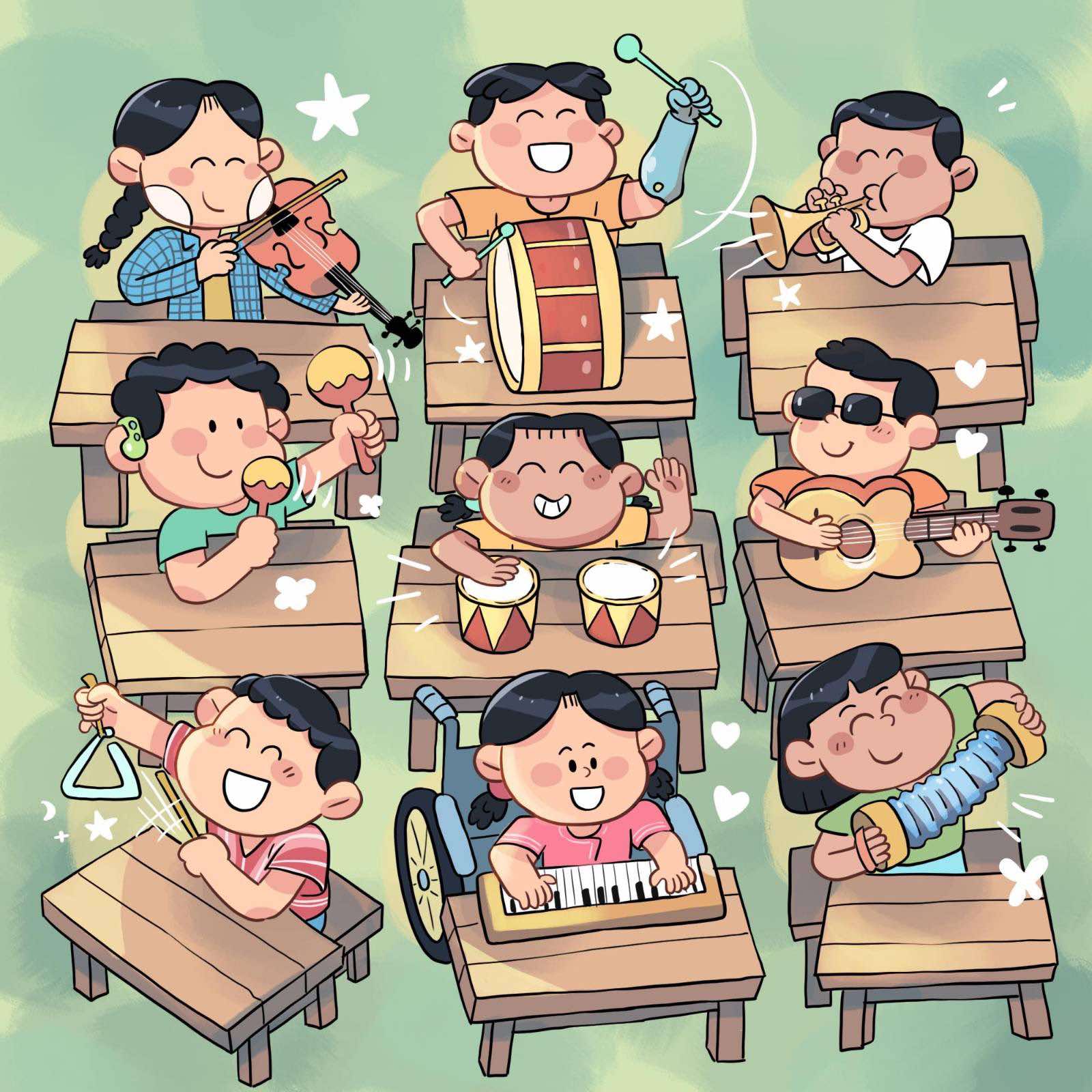
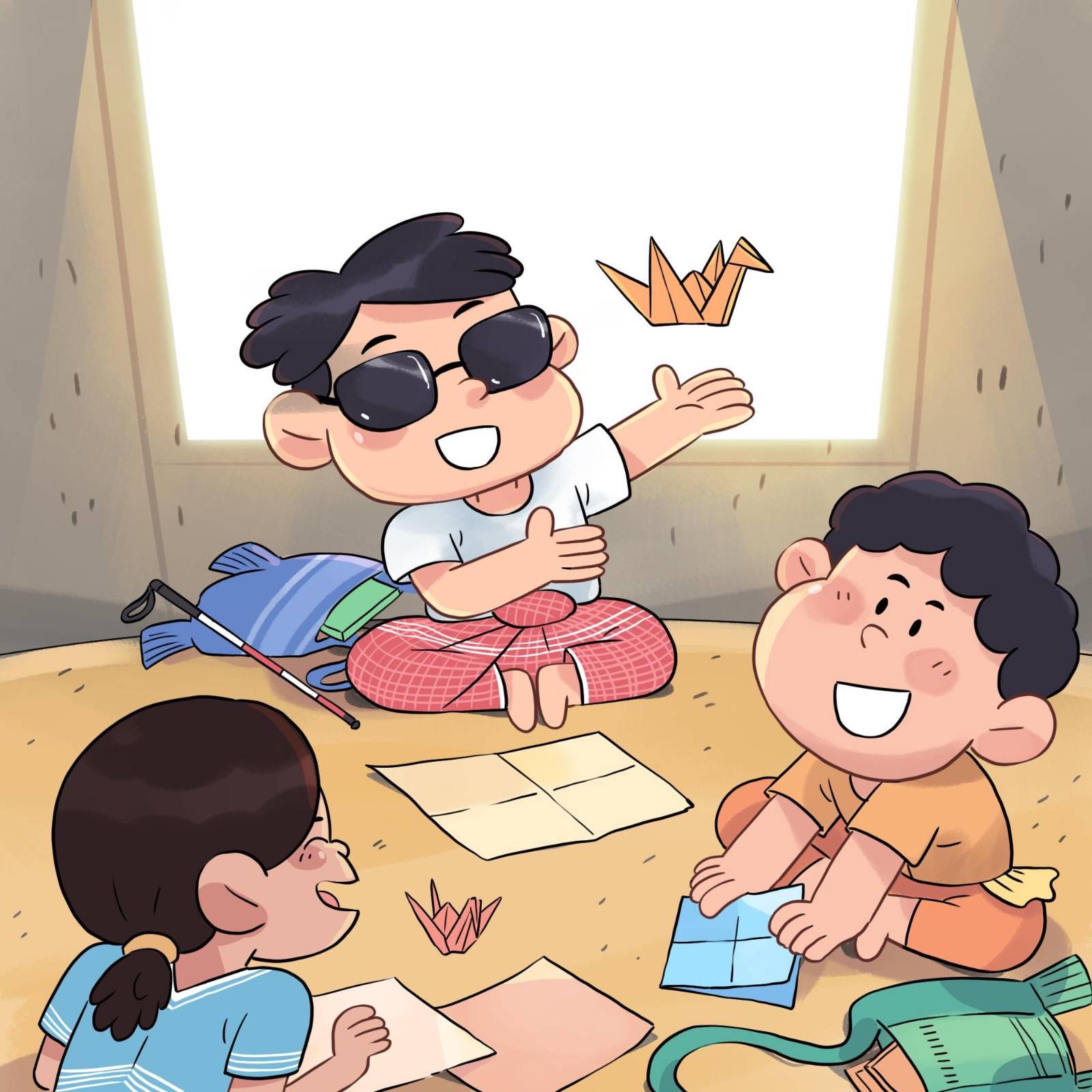
When asked about her least favourite part of school, with a laugh Nandar said, “having to read a lot.” Nandar prefers extracurricular activities. She loves being in the marching band, and enjoys drawing and handicrafts. Even though handcrafting might seem challenging due to her disability, she said she is actually better at this than her friends.
Nu Nu Aung and Nandar are leading the way, role models for people with disabilities who will follow in their footsteps. But, perhaps more than that, they are showing their fellow teachers and students that disability is just another point of difference.
 Myanmar Education Consortium